





Think about the number of digital platforms you interact with every day.
From the moment you wake up until you go to bed, your day is filled with screens, scrolling through social media, browsing websites, and streaming content. While much of the day is spent on work or study, evenings have become dedicated to entertainment.
Today, sitting on the couch and streaming a favorite show on a smart TV has become a preferred choice for many adults and so have the advertisements that come with it. This shift in consumer behavior is not just changing how people consume content; it is transforming how brands advertise.
Welcome to the era of CTV advertising. In this blog, we will discuss the growth of CTV advertising in the UAE and how marketers are growing the brands digitally.
Key Drivers Behind the Growth of CTV Advertising

The advertising landscape in the UAE is evolving rapidly, with Connected TV (CTV) at the center of this transformation.
As audiences move away from traditional television and embrace streaming platforms, brands are rethinking how they reach, engage, and convert their target audiences. Businesses targeting family and household audiences, in particular, are increasingly leveraging CTV to deliver more impactful and immersive advertising experiences.
Let’s look at the key factors driving the growing acceptance of CTV advertising.
1. Changing Consumer Behavior
Audiences are moving away from traditional TV shows toward on-demand, personalized streaming experiences. This enables marketers to target viewers more effectively based on demographics, location, interests, and behavior.
2. Increased Smart Device Adoption
The transition from traditional television to smart TVs has given users the flexibility to watch content anytime. Combined with high internet penetration and faster connectivity, including 5G, this has significantly accelerated CTV adoption.
3. Higher Audience Engagement
CTV offers a premium viewing environment where audiences are more attentive. This results in higher ad recall, better engagement rates, and improved campaign performance compared to other digital channels.
4. Data-Driven Capabilities
Unlike traditional TV advertising, CTV enables precise targeting and measurable outcomes. Brands can optimize campaigns in real time and track performance with greater accuracy, leading to better return on investment.
How CTV Advertising is Transforming Digital Advertising
Connected TV (CTV) advertising has rapidly reshaped the digital advertising landscape in the UAE, evolving from an emerging channel into a powerful, performance-driven medium.
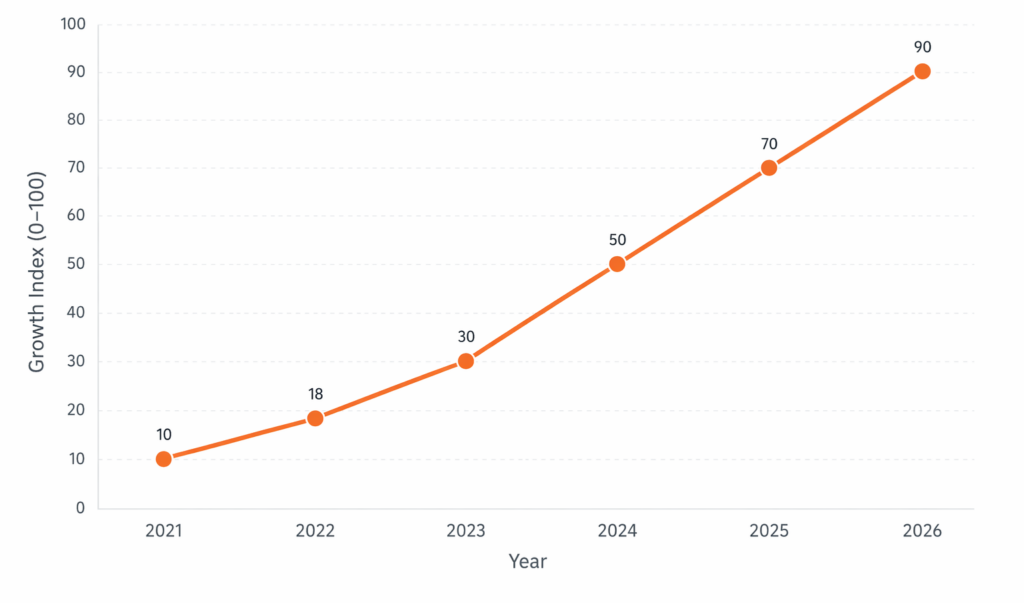
CTV advertising began gaining traction around late 2021 and quickly accelerated between 2022 and 2023. This growth has been largely driven by the shift from traditional television to smart TVs and streaming platforms. As audiences moved toward on-demand content, brands followed and adapted their strategies to meet consumers where they spend the most time.
The COVID-19 pandemic played a crucial role in this transformation. With people spending more time at home, streaming consumption surged, and connected devices became central to entertainment. Marketers responded strategically by increasing their digital investments, leading to widespread adoption of CTV advertising.
The Growth of CTV Advertising
2021: CTV was in its early stage in the UAE, driven by pandemic-era streaming growth, rising smart TV adoption, and rapid expansion of platforms like Netflix, Shahid, and OSN+ across the region.
2022: Digital advertising solidified its dominance in the UAE, supported by 99% internet penetration and Dubai’s growing status as the GCC’s digital advertising hub. Programmatic adoption accelerated strongly across real estate, e-commerce, and luxury sectors.
2023: The UAE online advertising market reached approximately USD 2.35 billion. Streaming platforms expanded their ad-supported tiers, bringing CTV squarely into media planning conversations for UAE brands for the first time.
2024- 2025: Programmatic advertising now accounts for an estimated 76% of digital ad revenue in the UAE. Globally, marketers reallocated an average of 36% of linear TV budgets to CTV, a shift clearly reflected in UAE media strategies, with brands moving away from traditional broadcast toward data-driven video advertising.
2026: CTV is becoming a premium channel for audience targeting in the UAE, offering higher personalization, measurable ROI, and full integration into omnichannel marketing strategies, supported by UAE Vision 2031’s goal to grow the digital economy from 9.7% to 19.4% of GDP.
Credits: Gitnux
CTV Advertising in the UAE: Key Statistics
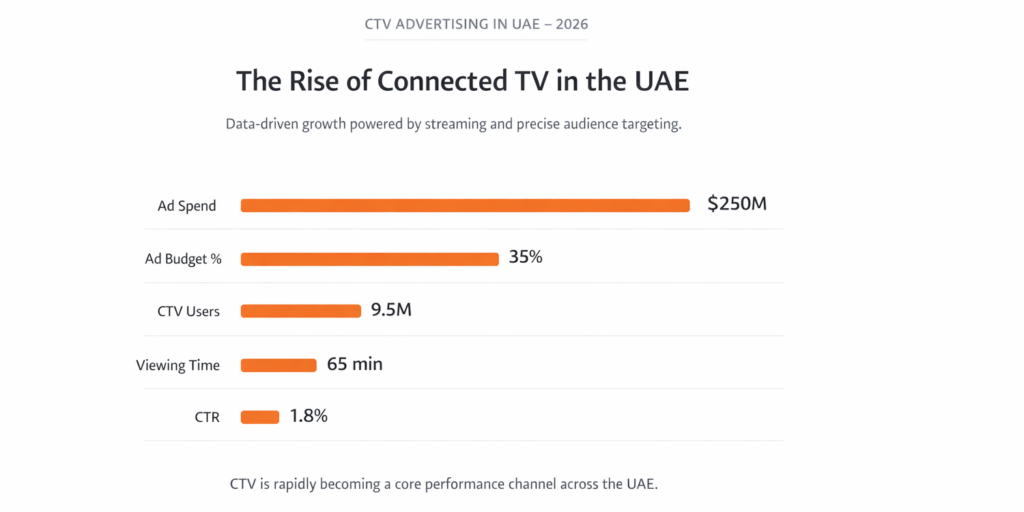
The rise of CTV advertising in the UAE in 2026 highlights just how rapidly the channel is gaining momentum. What was once an emerging format is now becoming a core part of modern media strategies.
-
- $250 million in total CTV ad spend
-
- 35% of digital ad budgets allocated to CTV
-
- 9.5 million CTV users across the UAE
-
- 65 minutes average daily viewing time
-
- 1.8% click-through rate, indicating strong engagement
These figures highlight a clear shift in how audiences consume content and interact with advertising.
Credit: StateGlobe
Why CTV Advertising Matters for Brands
The UAE’s growing CTV ecosystem presents a strong opportunity for marketers:
-
- High-impact storytelling on a larger screen
-
- Targeted reach with reduced media wastage
-
- Integration with broader digital marketing strategies
-
- Stronger performance compared to traditional television
-
- Enhanced outcomes through the use of AI-driven optimization and automation
-
- Fully measurable performance, making campaigns ROI-focused and data-driven
With a significant portion of digital budgets already shifting toward CTV, brands that delay adoption risk falling behind in an increasingly competitive market.
The Future of Advertising is streaming.
The UAE has established itself as a digital-first, streaming-driven market. With a growing user base and increasing engagement levels, one thing is clear: CTV advertising is no longer a trend; it is a core component of modern marketing strategies.
Brands that embrace this shift today will be better positioned to lead in the future.