


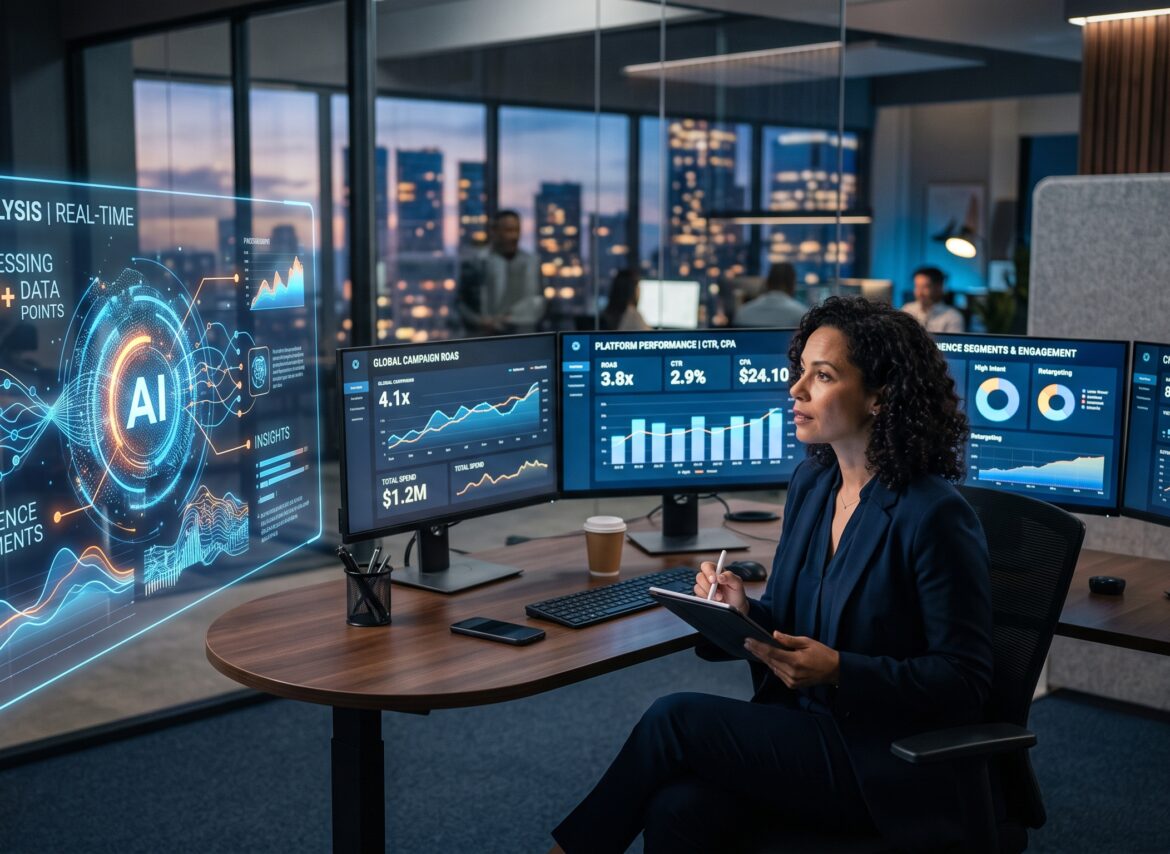

Performance marketing has always been about delivering measurable business results. Every click, impression, conversion, and customer acquisition is tracked, analyzed, and optimized to maximize return on investment (ROI). Today, artificial intelligence (AI) is transforming how performance marketing campaigns are planned, executed, and optimized.
Across platforms like Google Ads, Meta Ads, LinkedIn Ads, TikTok Ads, and programmatic advertising, AI now powers many of the decisions that once required hours of manual analysis. Campaigns can optimize in real time, predict customer behavior, and process millions of data points within seconds.
This combination of AI and human expertise is becoming the new competitive advantage in performance marketing.
In this article, we’ll explore the following:
- How AI is transforming performance marketing
- Where AI delivers the greatest value
- Why human strategy still matters
- Common mistakes businesses make with AI
- Why AI + human strategy consistently delivers better marketing results
1. How AI is Transforming Performance Marketing
Artificial intelligence has fundamentally changed how digital advertising platforms operate. Instead of relying solely on manual campaign management, AI continuously analyzes campaign performance, predicts outcomes, and makes thousands of optimization decisions automatically.
Today, AI influences almost every stage of a campaign.
Processing massive volumes of data
Every digital campaign generates an enormous amount of data, from impressions, clicks, and conversions to audience demographics, device types, browsing behavior, and engagement patterns. A single campaign can produce millions of data points across multiple platforms.
AI can analyze this information in seconds, uncovering insights that would take a human analyst days or even weeks to identify. It can simultaneously evaluate variables such as audience segments, keywords, placements, bidding strategies, geographic performance, and conversion paths to determine what drives the best results.
Instead of relying on assumptions, marketers can make decisions backed by comprehensive, real-time data analysis.
Real-time campaign optimization
Consumer behavior changes constantly. A campaign performing exceptionally well during the morning may decline later in the day because of changing competition, audience activity, or market demand.
AI monitors campaigns continuously and automatically adjusts:
- Bidding strategies
- Budget allocation
- Audience targeting
- Ad delivery
- Conversion optimization
Rather than waiting days to identify underperforming campaigns, AI reacts almost instantly.
Google Ads uses AI across Smart Bidding, Performance Max, and Demand Gen campaigns to optimize bidding, audience targeting, creative combinations, and placements based on real-time conversion signals.
Google DV360 continuously evaluates billions of bid opportunities across websites, mobile apps, Connected TV (CTV), Digital Audio, and Digital Out-of-Home (DOOH), helping advertisers reach the right audience at the right moment.
Meta’s Andromeda AI analyzes millions of potential ad-user combinations in real time. Rather than relying primarily on manually defined audiences, it evaluates user behavior, engagement signals, creative quality, and contextual relevance to determine which ad is most likely to generate a meaningful interaction.
LinkedIn Accelerate Campaigns use AI to simplify campaign creation while continuously optimizing audience selection, bidding strategies, and creative recommendations. LinkedIn’s AI can also identify professionals similar to your existing customers using first-party conversion data.
TikTok Smart Performance Campaigns (SPC) automate audience targeting, bidding, and creative optimization to help advertisers scale campaigns while reducing manual management.
Across every major advertising platform, the direction is the same: AI is increasingly managing campaign execution, while marketers focus on strategy, creativity, and business growth.
Smarter audience discovery
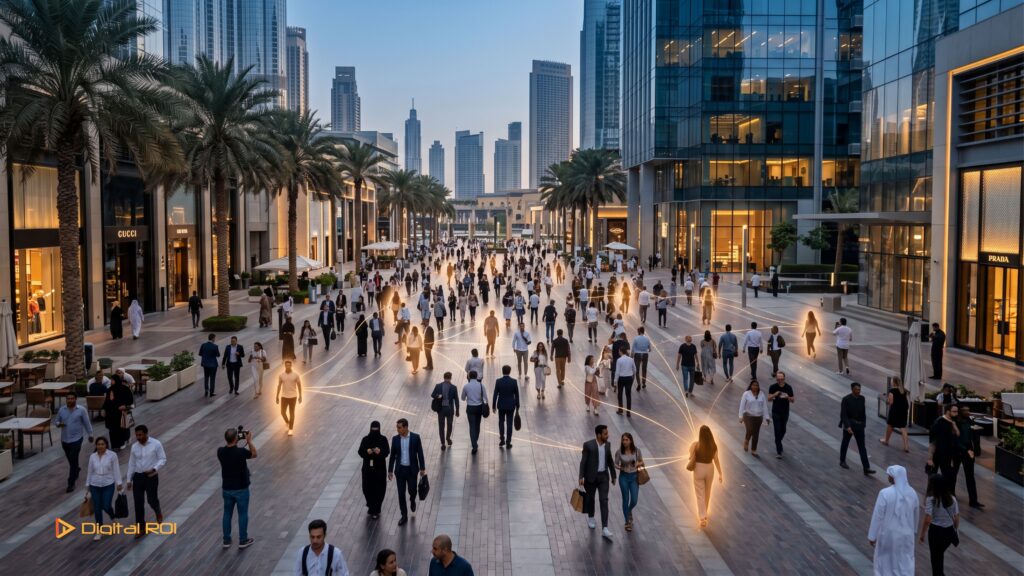
Finding the right audience has become increasingly sophisticated. Modern AI doesn’t simply target predefined audience lists. Instead, it identifies users most likely to convert by analyzing behavioral signals, engagement patterns, browsing history, contextual relevance, and historical conversion data.
Rather than starting with an audience definition and working forward, this generation of AI works in reverse: it evaluates the creative first, predicts which users are most likely to engage based on behavioral signals, and serves accordingly. Advertiser-defined audiences become a starting point rather than a fixed boundary, and lookalike matching happens continuously rather than as a one-time setup.
The practical shift for marketers is that audience strategy now lives in the quality of first-party data and creative variety feeding the algorithm, not in manually built targeting lists. AI expands audience opportunities far beyond what manual targeting alone could reach.
Faster creative testing
Successful performance marketing depends on continuous experimentation.
Traditionally, marketers would create A/B tests, wait for statistically significant results, analyze performance, and then implement improvements. AI accelerates this process dramatically.
It can simultaneously test:
- Headlines
- Images
- Videos
- Calls-to-action
- Ad copy
- Audience segments
- Landing page combinations
Instead of testing two versions of an ad, AI can evaluate hundreds of creative combinations simultaneously and prioritize the highest-performing assets.
Campaigns improve continuously without slowing marketing execution.
Predictive decision-making
One of AI’s greatest strengths is identifying patterns before they become obvious.
Machine learning analyzes historical and real-time performance to predict:
- Which audiences are most likely to convert
- When customers are most likely to purchase
- Which creatives will generate stronger engagement
- Which keywords may outperform competitors
- Which placements produce higher-quality leads
Rather than simply reacting to campaign performance, marketers can anticipate future opportunities.
2. AI in Performance Marketing: Why Human Strategy Still Matters

AI has become incredibly effective at optimization. But optimization alone doesn’t create business growth. AI determines the fastest path toward an objective. Human strategists determine whether that objective is the right one. That’s an important difference.
Understanding business objectives
AI can tell you which ad generates more clicks. A strategist asks the harder questions: Are these the right customers? Do they carry long-term value? Does this campaign support real business growth, not just traffic? Those are commercial judgment calls, not optimization problems.
Understanding regional markets
Performance marketing isn’t identical across every country. Campaigns targeting audiences in the UAE and GCC require cultural understanding that goes beyond data.
Seasonal events like Ramadan, Eid, UAE National Day, White Friday, and local consumer behavior influence purchasing decisions. Successful campaigns require localized messaging, creative direction, and timing. AI recognizes patterns. Human marketers understand culture. Together, they create campaigns that resonate with local audiences.
Building strong creative ideas
AI can generate headline variations all day. It can’t originate brand storytelling, emotional messaging, or a genuine creative concept. The strongest campaigns start with an idea AI can later optimize, but never create.
Interpreting performance beyond the dashboard
A sudden drop in conversions might come from a landing page issue, site speed, seasonal demand, competitor activity, a pricing change, or shifting market conditions. AI reports what happened. Experienced marketers work out why and what to do next.
Protecting brand reputation
AI optimizes toward predefined goals.
Without strategic oversight, campaigns may prioritize volume over quality or appear alongside unsuitable content.
Human marketers ensure campaigns remain
- Brand-safe
- Privacy-conscious
- Commercially aligned
- Focused on long-term business value
Optimization without governance can become expensive. Learn how a strategic approach to paid media can help brands generate qualified leads and maximize ROI with our Performance Marketing services.
3. The Winning Formula: AI + Human Strategy

The future of performance marketing isn’t AI replacing marketers; it’s the right partnership between the two.
| AI excels at | Humans excel at |
| Real-time bid optimization Budget allocation Audience discovery Predictive analytics Creative testing at scale Automated reporting | Business strategy & campaign planning Brand positioning & creative direction Regional and cultural market understanding Customer experience decisions Judgment calls under ambiguity |
AI improves execution. Humans provide direction. Together they create better marketing outcomes.
4. Common Mistakes Businesses Make With AI
Many businesses assume enabling AI automatically improves performance. In reality, AI is only as effective as the strategy behind it.
Some of the most common mistakes include:
Relying entirely on automation
Automation without strategic oversight often produces impressive metrics that fail to deliver meaningful business growth.
Optimizing the wrong objective
If AI is told to maximize leads, it will maximize leads. It won’t automatically prioritize lead quality, profitability, or customer lifetime value. Businesses must define success correctly before AI begins optimizing.
Ignoring first-party data
AI becomes significantly more effective when supported by CRM data, website interactions, customer lists, purchase history, and conversion data.
Better data produces better optimization.
Using generic AI-generated creatives
Many brands now rely entirely on AI-generated copy and visuals.
The result? Campaigns begin looking identical.
Strong brands use AI to accelerate production while relying on human creativity to build memorable campaigns.
Measuring only short-term performance
Performance marketing often focuses on immediate results such as clicks, conversions, cost per acquisition (CPA), or return on ad spend (ROAS). While these metrics are important, they don’t tell the whole story.
Businesses that rely solely on short-term performance risk overlooking long-term growth indicators such as customer lifetime value (CLV), brand awareness, customer loyalty, and repeat purchases. AI will optimize for the metrics it is given, so it’s essential to define success beyond immediate conversions and consider the broader impact on the business.
5. What This Means For Brands In The UAE
The UAE has become one of the world’s most digitally advanced advertising markets.
Platforms like Google Performance Max, Meta Advantage+, LinkedIn Accelerate, DV360, and TikTok Smart Performance Campaigns continue introducing more AI-powered automation every year.
This doesn’t reduce the need for marketers. It increases the need for strategic oversight.
As AI handles more campaign execution, businesses need experienced marketers who understand commercial objectives, local market dynamics, customer behavior, and long-term growth strategies.
The businesses that embrace this hybrid approach will outperform those relying solely on automation.
6. The Future Of Performance Marketing Is Hybrid

AI will keep reshaping performance marketing campaigns. They will run faster, optimization will get smarter, and automation will get more sophisticated. But strategy, creativity, and business insight stay fundamentally human. The future doesn’t belong to the agency with the most AI tools; it belongs to the one that knows how to combine AI with experience, creativity, and strategic thinking. Technology optimizes campaigns. People create growth.
At Digital ROI, the most successful performance marketing campaigns aren’t powered by AI alone. They’re powered by AI guided by human expertise. That’s how businesses achieve smarter decisions, better customer acquisition, and long-term ROI.
Frequently asked questions
Will AI replace performance marketers?
No. AI automates execution, bidding, targeting, and creative testing, but it can’t set business strategy, understand regional culture, or build original creative concepts. The strongest campaigns pair AI’s speed with human judgment.
What’s the difference between AI-driven and human-led performance marketing?
AI-driven marketing optimizes toward whatever objective it’s given, in real time and at scale. Human-led marketing defines what that objective should be, factoring in brand positioning, market context, and long-term value, something AI alone cannot do.
How does AI improve Google Ads and Meta Ads campaigns?
AI powers features like Google’s Performance Max and Smart Bidding and Meta’s Advantage+ and Andromeda, which analyze real-time signals to optimize bidding, audience targeting, and creative delivery automatically.
Why does regional market knowledge still matter for AI-powered campaigns?
AI recognizes behavioral patterns, but it doesn’t understand cultural context. Events like Ramadan, Eid, UAE National Day, and White Friday require localized messaging and timing that only experienced regional marketers can shape correctly.
Ready to combine AI efficiency with human strategy?
Digital ROI blends AI-powered platforms with hands-on strategic expertise to build performance marketing campaigns that convert across the UAE and GCC. Get in touch with our team at info@digitalroi.ae or message us on WhatsApp to see how a hybrid approach can improve your results.